
Biodegradable Food Containers: Types, Benefits, and Sourcing Guide
The definitive guide to biodegradable food containers — helping restaurants, caterers, and distributors choose the right sustainable packaging for their operations.
Understanding Biodegradable Food Containers
Biodegradable food containers are packaging products designed to naturally decompose into organic matter through biological processes after use. Unlike conventional plastic containers that persist in the environment for centuries, biodegradable alternatives break down into water, carbon dioxide, and biomass within weeks to months.
The distinction between 'biodegradable' and 'compostable' is important for businesses to understand. While all compostable materials are biodegradable, not all biodegradable materials meet the stricter standards for compostability. Certified compostable products like bagasse tableware break down within specific timeframes (60–90 days) under controlled conditions, leaving no toxic residues.
For food service operations, the ideal biodegradable container must balance environmental credentials with practical performance — handling hot foods, resisting grease and moisture, stacking efficiently for storage and transport, and presenting food attractively to end consumers.
Types of Biodegradable Containers
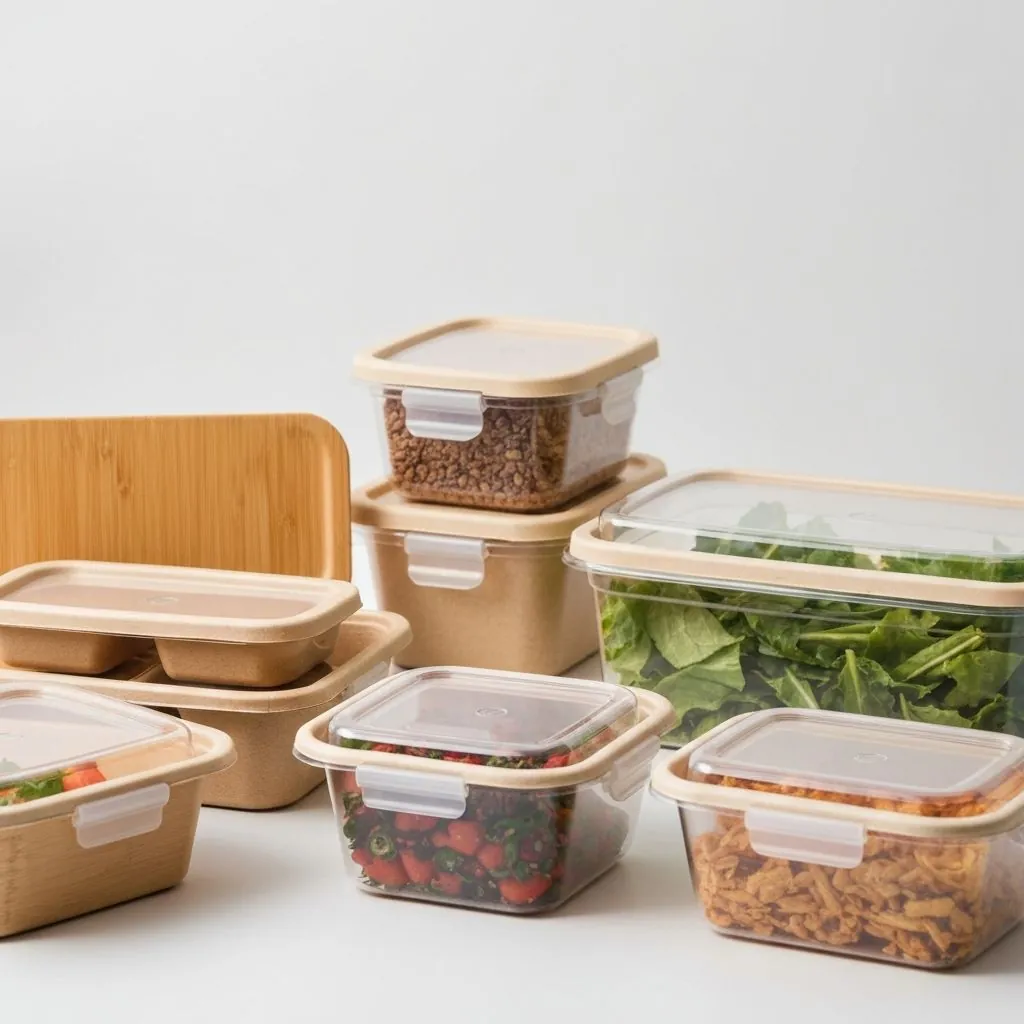
The market offers several categories of biodegradable food containers, each suited to different applications:
Clamshell Containers — Hinged designs ideal for burgers, sandwiches, salads, and takeout meals. Available in various sizes, these containers feature secure closures and ventilation options for optimal food quality.
Round and Rectangular Containers — Bowl-style containers for soups, curries, rice dishes, and desserts. Available with matching lids for spill-proof transport.
Compartment Trays — Meal trays with divided sections for complete meals, popular in institutional catering, airlines, and school food programs.
Plate-Style Containers — Flat plates in multiple sizes for dine-in service at events, catering functions, and food courts.
At Greenmendbio, all our containers are manufactured from sugarcane bagasse, the most proven and versatile material for food-grade biodegradable packaging.
Performance Characteristics That Matter
When evaluating biodegradable food containers for commercial use, buyers should assess several critical performance parameters:
Structural Integrity — The container must maintain its shape under load, whether stacked during storage or filled with heavy food items. Bagasse containers, formed under high pressure, offer excellent rigidity that matches or exceeds plastic alternatives.
Temperature Resistance — Food service operations require containers that handle both hot and cold items. Our bagasse containers are safe from -4°F to 220°F, outperforming PLA alternatives that warp above 140°F.
Moisture and Grease Resistance — Food containers regularly encounter oils, sauces, and condensation. Unlike paper plates that can become soggy, bagasse containers feature a naturally moisture-resistant surface created during the high-pressure molding process.
Microwave Safety — Modern consumers frequently reheat takeaway meals. All Greenmendbio containers are microwave-safe, eliminating concerns about chemical leaching that plague plastic containers.
Visual Appeal — Food presentation matters. Our containers feature clean, natural aesthetics that enhance food presentation and communicate sustainability to environmentally conscious consumers.
Sourcing Biodegradable Containers Wholesale
For businesses seeking reliable wholesale biodegradable container supply, several factors should guide supplier selection:
Manufacturing Capability — Partner with manufacturers who operate their own production facilities. Greenmendbio's Gujarat-based factory provides direct manufacturing control, ensuring consistent quality and competitive pricing.
Certifications — Verify that products carry recognized international certifications including FDA approval, ISO standards, and compostability certifications (ASTM D6400 / EN 13432).
Product Range — Select suppliers offering comprehensive product ranges spanning multiple container types and sizes, reducing procurement complexity.
Custom Branding — Many businesses require branded packaging. Look for manufacturers offering custom printing, embossing, and private-label options.
Export Experience — For international buyers, confirmed export capability with established logistics partnerships ensures reliable delivery timelines.
Contact Greenmendbio or request a wholesale quote to explore our full range of biodegradable food containers.
Frequently Asked Questions
What are biodegradable food containers made from?
The most common materials include sugarcane bagasse, PLA (corn starch bioplastic), molded paper fiber, palm leaf, and bamboo fiber. Sugarcane bagasse is the market leader due to its superior performance and genuine sustainability.
Are biodegradable containers safe for hot food?
Bagasse-based biodegradable containers safely handle hot foods up to 220°F (100°C). However, PLA-based containers have lower temperature limits (140°F), so always verify the material specifications for your intended use.
How long do biodegradable food containers take to decompose?
Bagasse containers decompose within 60–90 days in commercial composting facilities. In home composting environments, the process takes approximately 6–12 months depending on conditions.
Can biodegradable containers be used in the microwave?
Bagasse containers are fully microwave-safe. PLA containers should not be microwaved as they can warp at high temperatures. Always check the specific product specifications.
Related Editorial
Premium Bagasse Tableware: The Complete Guide for Businesses
Everything businesses need to know about bagasse tableware — from material science to wholesale purchasing and global distribution.
Eco-Friendly Food Packaging: A Complete Industry Guide
The definitive guide to eco-friendly food packaging — comparing materials, costs, certifications, and environmental impact for business decision-makers.
Ready to Transform Your Business?
Join distributors, restaurants, and catering brands worldwide already benefiting from our sustainable sugarcane bagasse solutions.