Premium Bagasse Tableware: The Complete Guide for Businesses
Everything businesses need to know about bagasse tableware — from material science to wholesale purchasing and global distribution.
What Is Bagasse Tableware?
Bagasse tableware refers to plates, bowls, trays, clamshells, and containers manufactured from sugarcane bagasse — the fibrous residue remaining after sugarcane stalks are crushed for juice extraction. Rather than treating this byproduct as waste, modern manufacturers like Greenmendbio transform it into premium-quality tableware that rivals traditional plastic and paper products in both performance and aesthetics.
The manufacturing process begins with collecting raw bagasse from sugar mills, followed by pulping, refining, and precision molding under high temperature and pressure. The result is a dense, rigid material that is naturally waterproof, oil-resistant, and microwave-safe. Unlike conventional disposable tableware, bagasse products decompose within 60–90 days in commercial composting facilities, making them one of the most environmentally responsible packaging options available today.
Bagasse tableware has gained remarkable traction globally. According to industry reports, the global bagasse tableware market was valued at $1.2 billion in 2023 and is projected to reach $2.8 billion by 2030, driven by regulatory pressures, growing consumer environmental awareness, and the material's superior functional characteristics.
Types of Bagasse Tableware Products
The versatility of bagasse allows manufacturers to produce an extensive range of food service products. At Greenmendbio, our product line includes:
Plates — Available in 6-inch, 7-inch, 9-inch, and 10-inch round configurations, as well as compartment plates for meal separation. Our plates feature reinforced rim design for structural integrity and are suitable for both hot and cold food service.
Bowls & Containers — From soup bowls to large serving containers, our bowl range addresses every food service need. Sizes range from 8 oz to 32 oz, with secure-fit lids available for takeaway operations.
Meal Trays — Multi-compartment trays designed for cafeteria-style service, airline catering, and institutional food programs. Available in 3-compartment and 5-compartment configurations.
Clamshells — Hinged containers ideal for takeout and delivery operations. Our clamshells feature snap-lock closures, ventilation slots, and grease-resistant linings for optimal food presentation.
Cutlery — Forks, knives, spoons, and combination sets that provide the rigidity and performance expected from conventional plastic cutlery, without any environmental drawbacks.
Why Businesses Are Switching to Bagasse
The business case for bagasse tableware extends far beyond environmental responsibility. Forward-thinking companies are discovering that transitioning to sustainable alternatives delivers measurable returns across multiple dimensions:
Regulatory Compliance — Over 127 countries have enacted legislation restricting single-use plastics. Early adopters avoid costly last-minute transitions when regulations become mandatory. The EU's Single-Use Plastics Directive and India's comprehensive plastic ban are accelerating global adoption.
Customer Perception — Research consistently shows that 73% of global consumers prefer brands demonstrating environmental responsibility. Restaurants and caterers using bagasse tableware report significant uplifts in customer satisfaction and repeat business.
Cost Efficiency — Modern manufacturing techniques have brought bagasse tableware pricing to near-parity with conventional alternatives. When considering the total cost of ownership — including disposal fees, regulatory compliance costs, and brand value — bagasse often proves more economical.
Supply Chain Resilience — Unlike petroleum-based plastics subject to volatile oil pricing, bagasse is sourced from a stable agricultural supply chain. Sugarcane is harvested globally in tropical regions, providing consistent raw material availability.
Quality Standards and Certifications
Professional-grade bagasse tableware must meet stringent international quality standards. At Greenmendbio, our products carry the following certifications:
- FDA Approved — Certified safe for direct food contact across all food categories and temperature ranges
- ISO 9001 — Quality Management System certification ensuring consistent manufacturing standards
- ISO 14001 — Environmental Management System certification validating sustainable production processes
- ASTM D6400 — American standard for compostability in commercial composting facilities
- EN 13432 — European standard for packaging recoverable through composting and biodegradation
These certifications are not merely decorative; they represent rigorous third-party testing and ongoing compliance monitoring. For businesses operating across multiple markets, these certifications provide the regulatory assurance needed for seamless international operations.
Wholesale and Export Information
Greenmendbio operates as a B2B manufacturer and global exporter, serving distributors, restaurant chains, catering companies, and institutional buyers worldwide. Our export capabilities include:
- Production Capacity — Our Gujarat-based manufacturing facility processes over 50 tons of raw bagasse daily
- Minimum Order Quantities — Competitive MOQs designed for both emerging distributors and established enterprise buyers
- Custom Branding — Private-label manufacturing with custom printing, embossing, and packaging options
- Global Shipping — Established logistics partnerships for reliable delivery to 50+ countries
- Quality Assurance — Every shipment includes batch-specific quality documentation and traceability records
To discuss pricing, customization options, or partnership opportunities, request a quote or contact our team directly.
Environmental Impact Assessment
The environmental credentials of bagasse tableware are compelling and well-documented:
Carbon Footprint — Manufacturing bagasse tableware produces 65% fewer greenhouse gas emissions compared to equivalent polystyrene products. Every ton of bagasse tableware produced prevents approximately 2.5 tons of CO₂ emissions.
Waste Diversion — By utilizing agricultural byproducts, bagasse manufacturing diverts millions of tons of sugarcane waste from landfills and open burning, reducing air pollution and soil contamination.
Composting — Unlike paper plates that may contain plastic coatings preventing composting, bagasse products are 100% compostable without any pre-treatment.
Water Usage — Modern bagasse manufacturing uses closed-loop water systems, consuming 40% less water than equivalent paper product manufacturing.
For businesses tracking their Environmental, Social, and Governance (ESG) metrics, transitioning to bagasse tableware provides quantifiable improvements across multiple sustainability indicators.
Frequently Asked Questions
What is the minimum order quantity for bagasse tableware?
Minimum order quantities vary by product type. Contact Greenmendbio directly for specific MOQ details and wholesale pricing tailored to your business requirements.
Can bagasse tableware be customized with our branding?
Yes, Greenmendbio offers private-label manufacturing including custom printing, embossing, and branded packaging for orders meeting minimum volume requirements.
Is bagasse tableware suitable for hot and cold foods?
Absolutely. Bagasse tableware safely handles temperatures from freezer to microwave (up to 220°F / 100°C) without warping, leaching, or structural degradation.
How does bagasse compare to plastic tableware in cost?
Modern manufacturing has brought bagasse pricing to near-parity with conventional plastic alternatives. When factoring disposal costs, regulatory compliance, and brand perception benefits, bagasse often represents better overall value.
Does bagasse tableware hold liquids without leaking?
Yes. The high-pressure molding process creates a naturally waterproof and grease-resistant surface. Our bowls and containers safely hold soups, sauces, and oily foods without leaking or softening.
Related Editorial
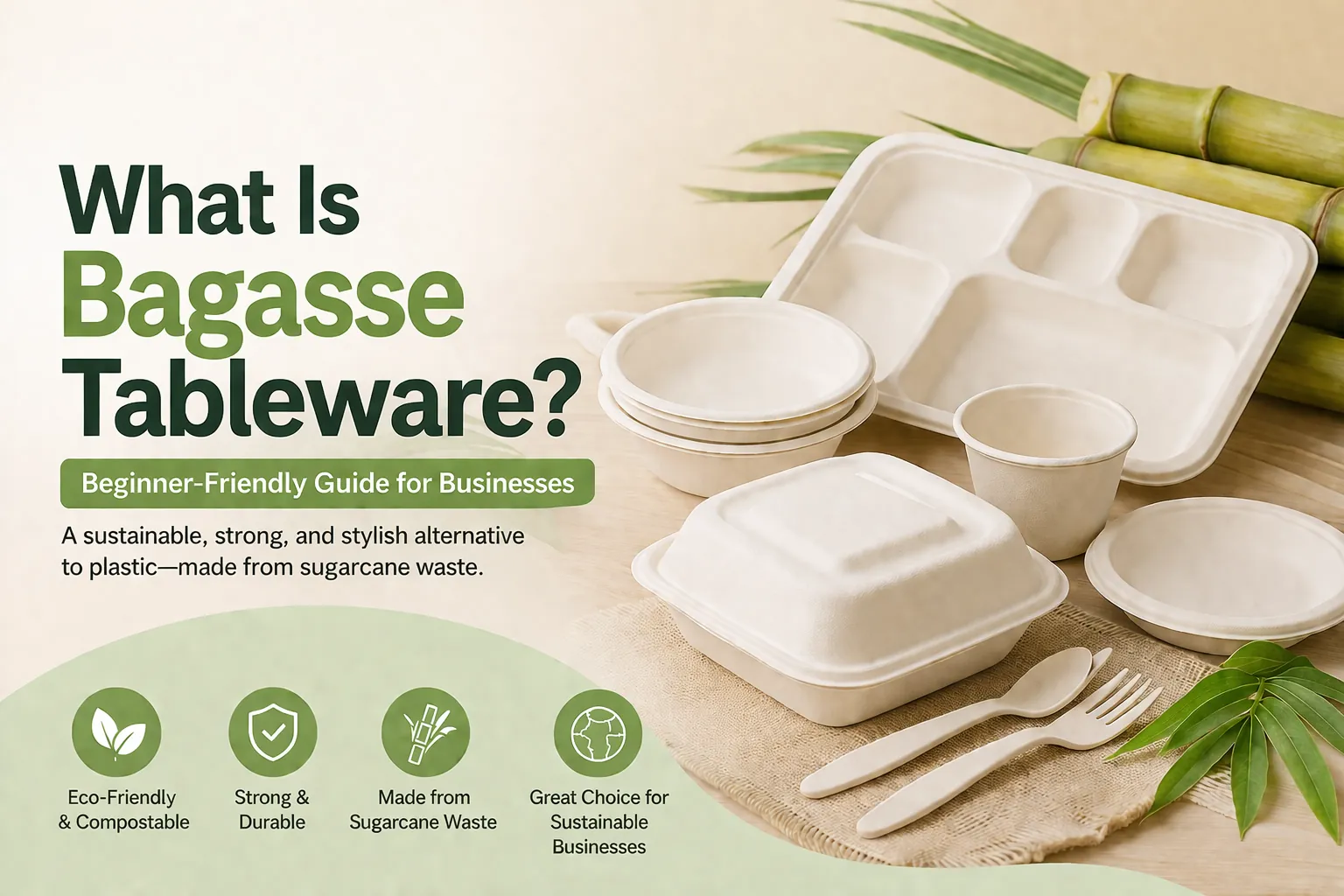
What Is Bagasse Tableware? Beginner-Friendly Guide for Businesses
A clear, non-technical explanation of bagasse tableware — what it is, how it is made, and why it has become the preferred eco-friendly alternative to plastic and paper disposables.
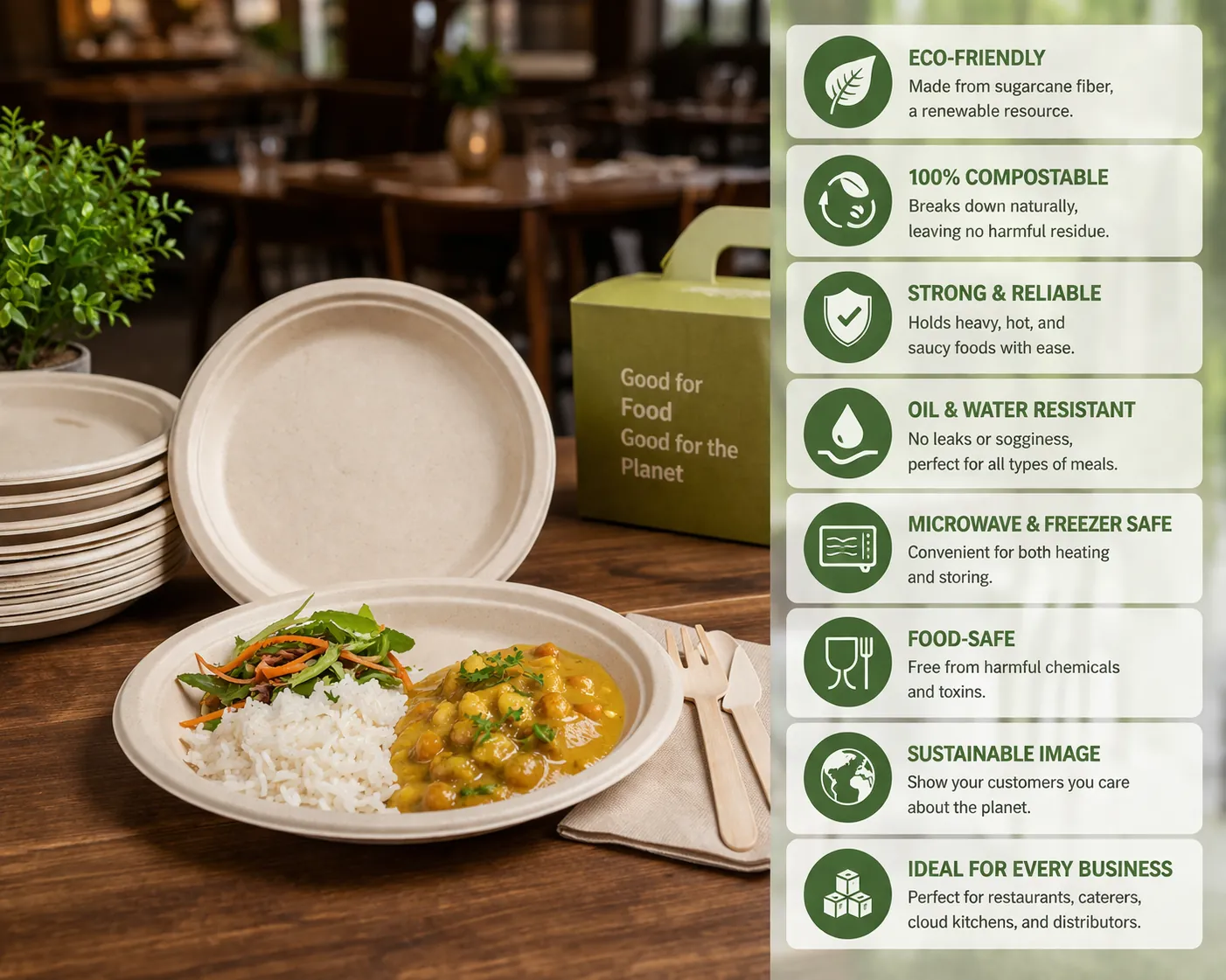
Benefits of Sugarcane Bagasse Plates for Restaurants, Caterers, and Distributors
Sugarcane bagasse plates deliver far more than eco‑credentials. Discover how they improve operations, strengthen brands, and open new market opportunities for distributors.
Ready to Transform Your Business?
Join distributors, restaurants, and catering brands worldwide already benefiting from our sustainable sugarcane bagasse solutions.